Choosing a shipping carton is not simply a matter of buying the thickest box. A carton that is too large can increase void fill, packing time and transport costs; one that is too weak can crush during handling or stacking. For UK wholesale buyers, the useful specification starts with the product, the packed weight, the route and how the parcel will be stored.
This guide explains single-wall and double-wall corrugated boxes, how to specify dimensions, when different constructions are worth considering, and how to avoid common purchasing mistakes. The examples are buying scenarios, not claims about GCL’s current stock or tested performance.
What is the difference between single-wall and double-wall corrugated board?
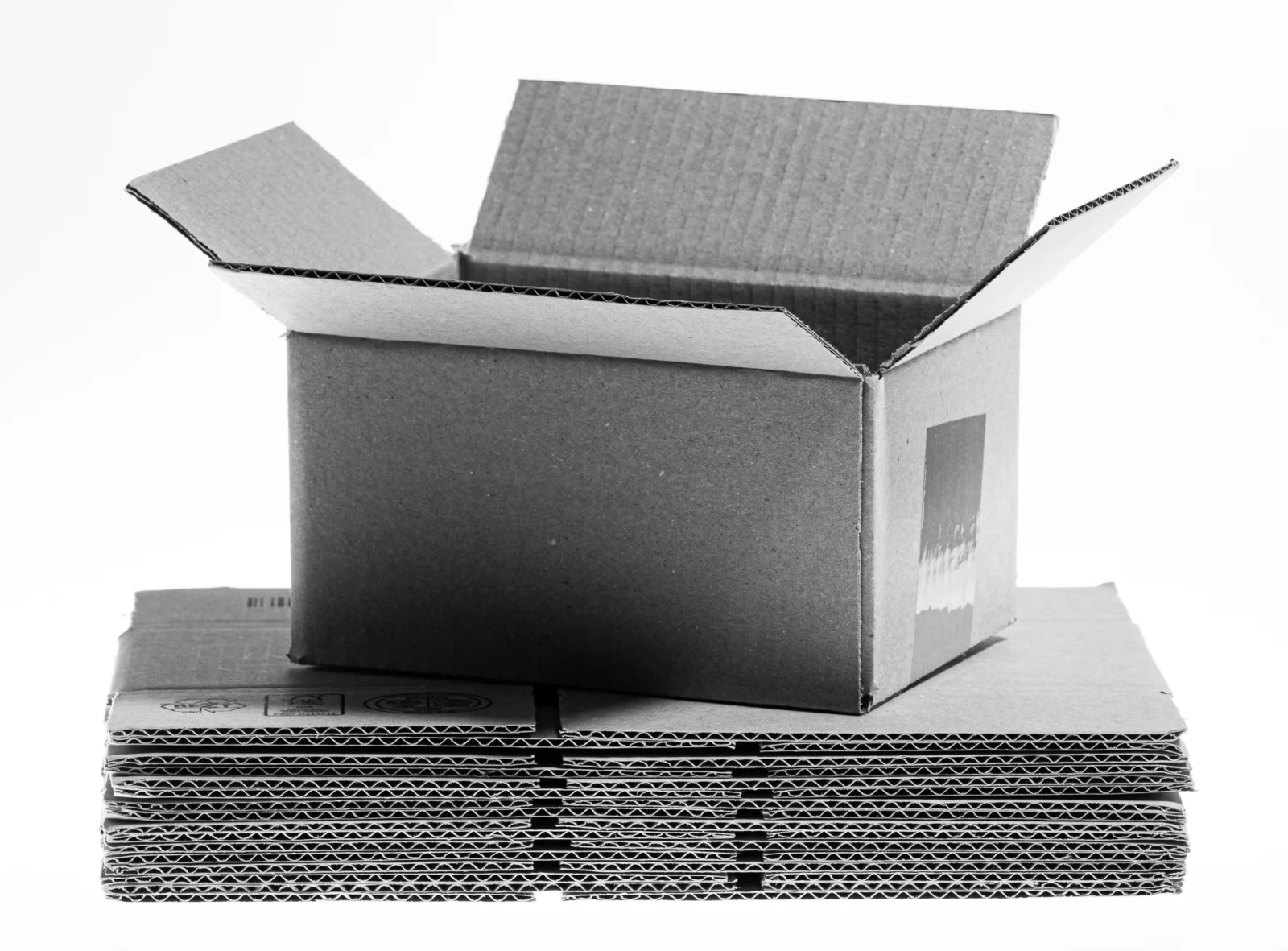
Corrugated board combines flat paper liners with a fluted paper medium. Single-wall board normally contains one fluted layer between two liners. Double-wall board contains two fluted layers separated by an additional liner, creating a five-paper-layer structure. Different flute profiles, papers and manufacturing choices can make substantial differences to the finished carton.
Double-wall construction can offer more stacking strength and resistance to compression for some applications, but it is not automatically better. A well-specified single-wall carton can outperform a poorly specified double-wall alternative in a given use case. Ask for actual board and box performance information rather than relying on layer count alone.
At-a-glance comparison
| Buying factor | Single-wall carton | Double-wall carton |
|---|---|---|
| Construction | One corrugated flute layer | Two corrugated flute layers |
| Typical suitability | Light to moderate goods with suitable fit and protection | Heavier, denser or more demanding loads where testing supports the choice |
| Material and space | Generally less board and compact when flat | Generally more board and greater board thickness |
| Cost | Often lower for a comparable size | Often higher, depending on specification and order volume |
| Main purchasing risk | Underspecifying strength | Paying for unnecessary material without solving poor fit or cushioning |
These are broad trade-offs, not certified performance ratings. Flute combination, paper grade, moisture exposure, joint quality and box geometry all matter.
Start with the packed product, not the empty box
Before requesting a carton quotation, measure and weigh the finished pack: product plus retail packaging, protective inserts, paperwork, void fill and any secondary wrapping. Record the maximum filled weight, not just the average item weight. A box holding a dense metal component may need a different board specification from one holding a similarly sized lightweight textile.
Then describe the journey. Will it be individually couriered, grouped on a pallet, stacked in a warehouse, exposed to damp conditions or repeatedly handled? Will the contents support some of the vertical load, or is the carton carrying the compression itself? If damage costs are high, request samples and carry out a documented packing and distribution trial.
Three practical buyer scenarios
- Lightweight e-commerce accessories: a close-fitting single-wall postal carton may be a sensible first option. Prioritise minimal void space, reliable closure and a packing process that operators can repeat consistently.
- Mixed wholesale consumables: where several dense packs share one carton, compare board strength, internal dividers, total weight and the ability to close the carton without bulging. Double-wall may be justified, but a smaller split shipment can sometimes reduce handling risk.
- Stacked bulk dispatch: specify the number of cartons per layer, pallet height, storage duration and humidity risk. Request evidence for compression performance under conditions representative of the actual load.
How to measure a carton correctly
Use the sequence length × width × height (L × W × H), but check whether the supplier quotes internal or external dimensions. Internal dimensions help determine what fits. External dimensions affect carrier size limits, shelf space, pallet layouts and dimensional-weight calculations. Board thickness means internal and external figures differ; never assume one is interchangeable with the other.
For example, a product occupying 300 × 200 × 100 mm is unlikely to fit comfortably into an internal carton of precisely those dimensions once inserts, tolerances and packing movements are considered. Establish the minimum useful clearance with a physical sample. Too much clearance, however, can allow movement and waste cushioning material.
Ask whether dimensions refer to the erected carton, and whether the specified height includes closed flaps or protruding closures. This matters particularly for carrier gauges and automated packing lines.
Box styles: what does FEFCO 0201 mean?
A common shipping-carton design is the regular slotted container (RSC), identified by FEFCO-style code 0201. Its outer flaps generally meet at the centre when closed, making it familiar for taped dispatch cartons. The Fibre Box Association’s box-style guide describes this construction and related styles. A FEFCO code identifies the design, not a universal load capacity, paper grade or price.
Other formats, including die-cut postal boxes, trays and telescopic arrangements, suit different packing tasks. For rapid pick-and-pack operations, compare assembly time, tape consumption and whether the lid is secure during handling. A quicker-to-assemble carton may be cheaper in total even when its unit purchase price is higher.
Which performance details should a wholesaler ask for?
“Heavy duty” is not a sufficiently precise technical specification. Useful questions include:
- Board construction: single or double wall, flute combination, liners and any stated material grade.
- Strength evidence: whether edge-crush, box-compression or other relevant test data are available, and the test method and conditioning used.
- Working load: the supplier’s recommended application and any limitations, without treating a laboratory result as a blanket safe-weight guarantee.
- Moisture and storage: suitability for temperature or humidity variations, especially for longer-term stacking.
- Manufacturing tolerances: consistency of internal size, folding, joints and automated erecting performance.
The FCBM technical report on regular slotted container tolerances explains why size, flap and squareness tolerances matter on automated lines. It also addresses different single-wall and double-wall board constructions. Use supplier-specific specifications rather than generalising its example test ranges to all boxes.
Check the carrier’s limits using the finished parcel
For familiar Royal Mail domestic formats, the published Small Parcel limit is up to 45 × 35 × 16 cm and 2 kg. The published Medium Parcel dimensions are up to 61 × 46 × 46 cm, with weight limits depending on the service. A box must satisfy all applicable limits once filled, closed and labelled. Royal Mail’s UK service information gives the format details; business services can have different terms and should be checked separately.
A carton that narrowly exceeds a size limit can push the shipment into a less favourable service or trigger handling problems. Do not buy thousands of cartons based on an empty sample that only just fits the measuring gauge. Confirm the packed, sealed dimensions and current service conditions with your carrier.
Calculate the total cost per successful delivery
Compare the whole dispatch process, rather than the price of an empty carton alone. A useful purchasing worksheet includes carton price; cushioning and tape; seconds required to erect, fill and close; storage volume; shipment size and weight; damage claims; returns; and disposal requirements.
As a simple illustration, suppose Carton A costs 10p less than Carton B but requires an extra 20 seconds of packing labour and more protective fill. Whether A saves money depends on the labour rate, filler cost, damage rate and order profile. Those numbers are hypothetical: measure them against your own workflow rather than adopting a universal rule.
Test at least two appropriate specifications with representative orders. Keep the product, operator instructions and carrier route comparable. Record transit damage, pack time, wasted filler and any customer complaints before changing the standard carton.
Recycling and UK packaging obligations
Corrugated cardboard is widely recyclable when it is clean and appropriately prepared. Recycle Now advises removing tape, polystyrene and plastic inserts from corrugated cardboard; collection arrangements vary, so businesses should follow their commercial waste contractor’s instructions rather than assuming household rules apply.
Packaging buyers should also be aware of extended producer responsibility (EPR) for packaging. Obligations are not determined solely by whether a box is recyclable. They depend on the business, packaging activities, quantities, turnover and other criteria. Government guidance explains who may be an obligated producer, reporting duties and the relevant requirements. Check the current GOV.UK eligibility guidance or obtain specialist advice where appropriate.
Reducing unnecessary empty space, choosing a right-sized box and avoiding difficult-to-separate materials can improve packing efficiency and ease downstream sorting. Neither “recyclable” nor “double wall” alone proves a lower environmental impact; total materials and transport outcomes also matter.
A practical carton buying checklist
- List the products, outer dimensions and maximum packed weights.
- Specify internal size and confirm external size with the supplier.
- Describe courier, pallet, stacking, storage and moisture conditions.
- Request construction details and application-relevant strength evidence.
- Check the box style, flap closure and packer’s assembly time.
- Trial actual filled parcels through the intended delivery process.
- Compare total landed-and-packed cost, not carton price alone.
- Document the selected specification so repeat orders are consistent.
Frequently asked questions
Is double-wall cardboard always stronger?
No. It offers another corrugated layer, but strength depends on the paper, flutes, manufacturing, dimensions and environmental conditions. Choose against a defined load and a relevant test or supplier recommendation.
Can I use single-wall cartons for courier deliveries?
Yes, where the selected carton and internal protection suit the product and route. There is no universal rule that every courier parcel must be double wall.
Are box dimensions measured inside or outside?
Suppliers often quote internal dimensions, whereas carriers assess the outside of the finished parcel. Confirm both in writing when postage or automated equipment clearances are important.
Does a thicker carton replace bubble wrap or inserts?
Not necessarily. Board protects the overall package, while internal protection controls product movement and local impacts. Fragile or irregular items may still require targeted cushioning.
How can I compare two suppliers fairly?
Give both suppliers the same internal size, carton style, intended packed weight, route and volume requirement. Ask for comparable construction and performance data, then run a small controlled dispatch trial.
Discuss your packaging requirements with GCL
For an informed trade enquiry, provide your required carton dimensions, approximate quantities, packed weights and delivery use case. Explore GCL’s packaging supplies information and contact the GCL trade team to discuss your requirements. Availability and specifications should be confirmed before ordering.
References
- Fibre Box Association: Box Styles Basics (RSC/0201 design and terminology).
- FCBM: Tolerances for Regular Slotted Containers (technical scope and box manufacturing tolerances).
- Royal Mail: UK parcel dimensions (check current service requirements).
- Recycle Now: Cardboard (general recycling preparation).
- GOV.UK: Extended producer responsibility for packaging (current regulatory guidance).
- Featured photograph: Renmontom / Wikimedia Commons, CC BY-SA 4.0; resized and converted to WebP.