Choosing the right mailing bag is a packaging decision, not simply a price comparison. A bag needs to fit the packed product, protect it during handling, carry a readable label and close securely. For a retailer dispatching hundreds of orders, small differences in bag size, film specification and packing time can affect both costs and customer experience.
This guide explains how UK trade buyers can compare polythene mailing bags, padded mailers and alternative packaging, including the measurements and questions worth checking before placing a wholesale order.
Quick answer: which mailing bag should you buy?
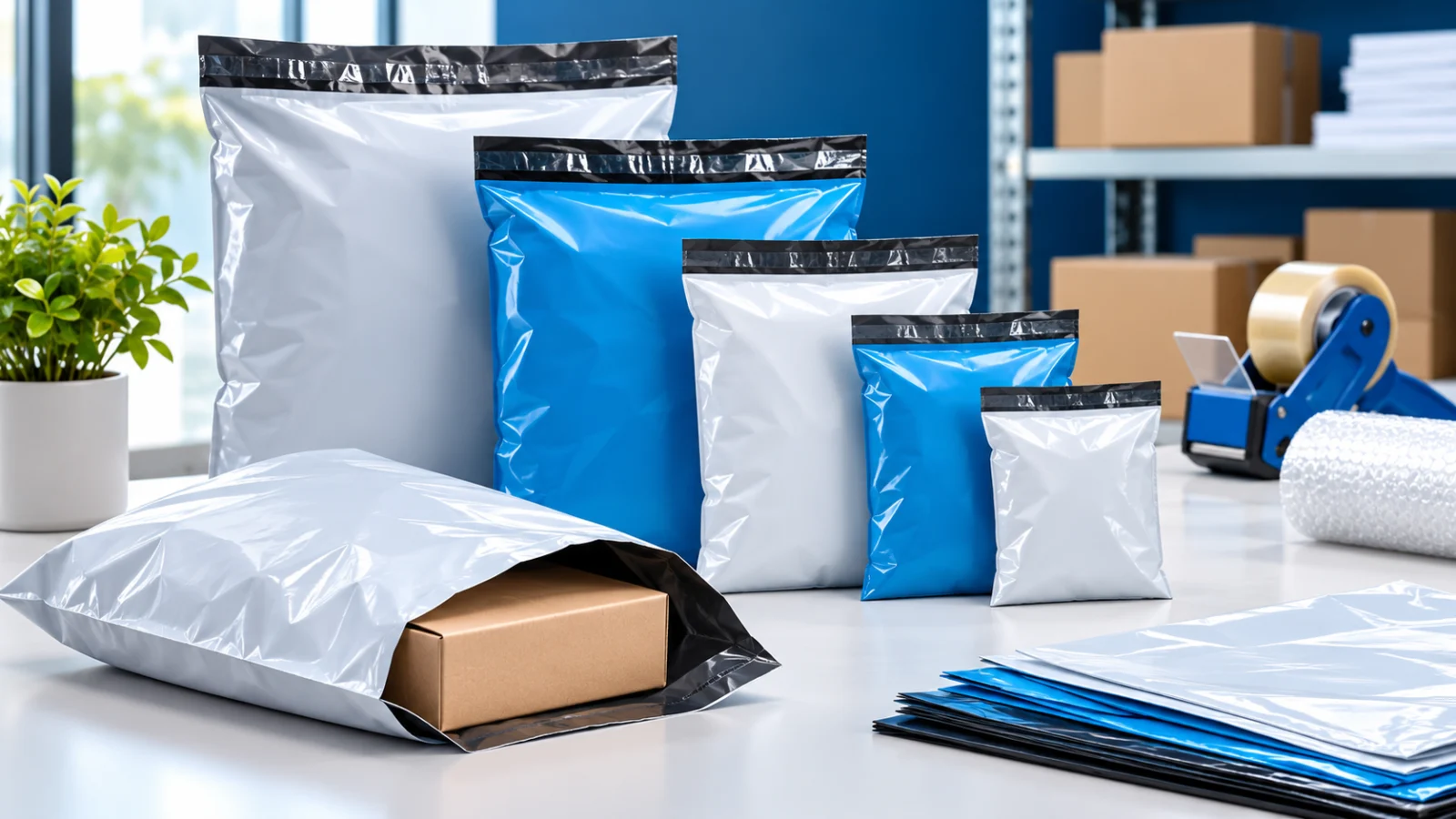
- Soft, non-fragile goods: an appropriately sized opaque polythene mailing bag with a reliable closure is often a practical starting point.
- Small items needing cushioning: consider padded mailers, subject to the item’s weight, shape and fragility.
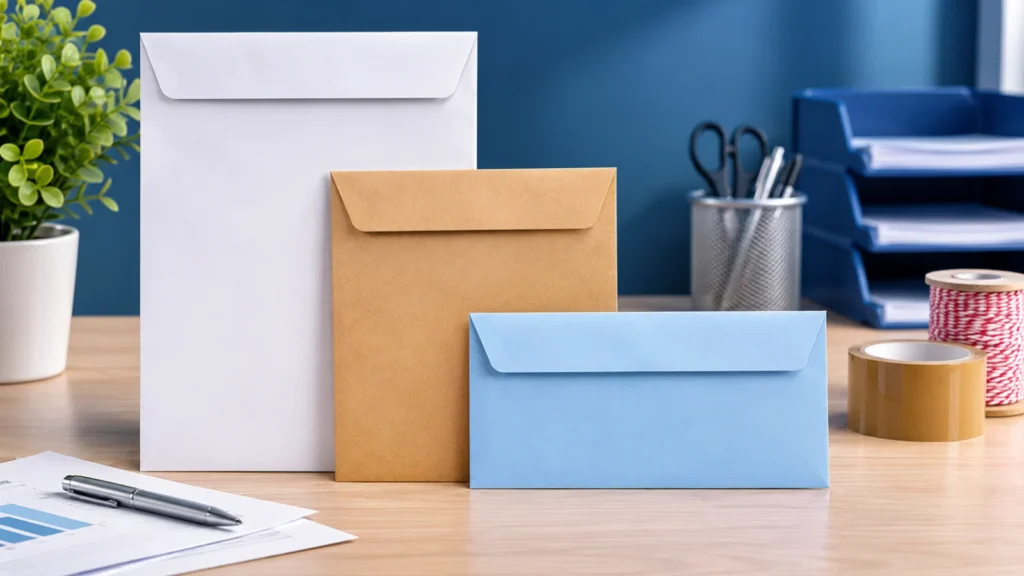
- Documents that must remain flat: look at board-backed envelopes or rigid mailers rather than a flexible bag.
- Fragile, heavy or sharp-edged products: use a suitable box and cushioning; a thin mailing bag is not a substitute for impact protection.
These are selection principles rather than claims about a particular product. Test a representative packed order before buying a full case.
1. Measure the packed product, not the product alone
Start with the product as it will actually leave your dispatch bench, including inner protection and any documentation. Record its length, width, thickness and weight. A flat mailer is two-dimensional until it wraps around the contents: a thick item consumes some of the available width, and the closure flap also needs room.
Practical example: suppose a folded garment, including its inner wrap, measures 270mm long, 220mm wide and 35mm deep. As an initial sizing check, the flat bag needs sufficient usable width to wrap around the item’s 220mm width and its 35mm thickness, plus handling clearance. The usable bag length also needs to accommodate the packed item’s depth and still leave enough room for the closure. This is a starting estimate, not a universal sizing formula: supplier dimensions may describe the bag body, overall length or length including the flap.
Request the bag’s usable internal dimensions, note whether the seal flap is included, and pack several real samples. The smallest bag that closes without stress and leaves a clear label area is usually a better choice than automatically buying a much larger bag.
2. Understand microns and gauge
Polythene film thickness is commonly stated in microns (µm). One micron is one-thousandth of a millimetre. UK packaging suppliers may also use the older term gauge: as a conventional polythene conversion, 100 gauge is approximately 25 microns.
| Nominal film thickness | Equivalent UK gauge | What to consider |
|---|---|---|
| 40 µm | 160 gauge | Evaluate for light, flexible items after packing trials. |
| 50 µm | 200 gauge | Compare against the weight and edges of the packed contents. |
| 75 µm | 300 gauge | A thicker film option to assess where handling demands are greater. |
| 90 µm | 360 gauge | Consider alongside resin quality, welds and sealing performance. |
Important: a thicker film is not automatically the strongest bag. Resin formulation, film construction, weld quality, recycled content and puncture resistance all matter. Check whether the stated thickness is for one wall of the film, not a measurement taken through both sides of the flattened bag.
3. Compare the main mailing materials
Polythene mailing bags
Polythene mailers are lightweight, flexible and commonly supplied with self-adhesive peel-and-seal closures. Opaque versions help conceal contents. They can provide a barrier against incidental moisture, but do not assume that every mailer is waterproof or suitable for sharp objects. Ask about film thickness, recycled content, seal construction and whether the product is intended for single or return use.
Paper mailers
Paper packaging may suit specific brand presentations and contents, but paper composition, wet strength and closure construction vary. A paper mailer is not automatically suitable for a heavy, damp or sharp-edged item. Review the complete pack rather than judging only by the outer material.
Bubble-padded envelopes
Padded mailers add cushioning for suitable small products. Check the filled thickness and weight because additional padding can move a mailing into a different postal format. Fragile electronics, glass and ceramics may need a more protective packing method.
4. Check postal dimensions after the bag is filled
The postage format depends on the finished item, not the empty bag’s advertised size. Royal Mail publishes these maximum sizes for common UK 1st and 2nd Class formats:
| Format | Maximum dimensions | Maximum weight |
|---|---|---|
| Letter | 240 × 165 × 5mm | 100g |
| Large Letter | 353 × 250 × 25mm | 750g |
| Small Parcel | 450 × 350 × 160mm | 2kg |
Service-specific terms may differ. Measure and weigh the sealed package before selecting postage, and check the carrier’s current guidance. A large mailing bag does not necessarily mean a parcel-rate shipment if the packed dimensions are within a smaller eligible format, and the reverse is also true.
5. Check the seal, labelling and dispatch workflow
- Closure: test peel-and-seal adhesion on clean bags, with the actual packed contents inside. Confirm that the flap closes without strain.
- Label placement: allow a clean, smooth area for the barcode and address; avoid placing the label over a fold or seam.
- Return requirements: if customers regularly return goods, check whether a second adhesive strip or an alternative return method is needed.
- Product protection: ensure corners, zips and other hard edges do not pierce the film.
- Storage: keep bags in conditions appropriate to the manufacturer’s adhesive and film specification.
6. Compare the total cost per dispatched order
Unit price matters, but it is not the entire cost. Consider bag price + packing time + any additional protective material + likely damage or return costs + the final shipping format.
For example, saving 1p per bag across 1,000 orders saves £10 in packaging spend. A more difficult closure, wasted oversized bags or a change in postage format could outweigh that saving. A short packing trial with actual products is more useful than choosing solely by price per thousand.
7. Ask the right questions before buying in bulk
- What are the usable internal dimensions, excluding the flap?
- What is the nominal film thickness in microns, and is it per wall?
- Is the bag opaque, and what adhesive or closure is fitted?
- What materials and recycled content are stated on the specification?
- What quantity comes in a case, and is the order packed in manageable bundles?
- Can we test a sample with our heaviest or most awkwardly shaped item?
Frequently asked questions
Are mailing bags measured including the seal flap?
Not consistently. Packaging suppliers use different dimension conventions, so request usable dimensions and flap depth in millimetres.
Does higher gauge always mean better puncture resistance?
No. Gauge indicates nominal thickness. Puncture and tear performance also depend on the film material, manufacturing process and quality of the seams.
Can a mailing bag be sent as a Royal Mail Large Letter?
Potentially, if the finished item meets the selected service’s maximum dimensions, weight and other requirements. Always measure it when sealed.
Are polythene mailers recyclable?
Recycling options depend on the material, labels, adhesive and available local collection systems. Do not print a general recyclable claim without verifying the specific product and collection route. Businesses that place packaging on the UK market may also need to assess extended producer responsibility obligations.
Need wholesale mailing bags or packaging supplies?
Genuine Centre Ltd supports trade enquiries for packaging materials, including mailing bags, protective envelopes, labels and tape. Contact our team with the dimensions, expected monthly volume and type of goods you dispatch, and we can discuss your requirements and availability.
More GCL buying guides
Sources and further reading
- Royal Mail: 1st and 2nd Class format and size limits
- More Polythene: UK micron and gauge measurements
- GOV.UK: Extended producer responsibility for packaging
Research checked: 11 November 2026. This guide provides general purchasing information. Individual packaging specifications, carrier terms and legal obligations must be checked for your circumstances.