Choosing between direct thermal vs thermal transfer labels starts with a deceptively simple question: how long must the printed information remain readable? A shipping label used for a short courier journey has different requirements from a warehouse asset label that needs to survive repeated handling. Buying the wrong media can result in wasted rolls, unreadable barcodes and avoidable interruptions at the packing station.
This guide helps UK wholesale buyers specify the printing method, label dimensions, adhesive and consumables before placing a bulk order.
Direct thermal vs thermal transfer labels: what is the difference?
Direct thermal printers create an image on a heat-sensitive label without a separate printing ribbon. Thermal transfer printers instead use heat to transfer a ribbon coating onto the label surface. The choice affects running costs, material compatibility and the durability of the printed information.
| Buying criterion | Direct thermal | Thermal transfer |
|---|---|---|
| Ribbon required | No | Yes |
| Typical application | Short-duration dispatch labels | Longer-term identification |
| Media selection | Heat-sensitive stock | Compatible label and ribbon combination |
| Main purchasing consideration | Exposure and readability over time | Matching ribbon, substrate and operating conditions |
Neither method guarantees a particular label lifespan. The actual conditions and material specification determine whether it is suitable.
When should a business choose direct thermal labels?
For a dispatch operation sending parcels every day, direct thermal labels are often a practical starting point. There is one fewer consumable to replenish, and operators can focus on changing label rolls and maintaining the printer. The printed surface is sensitive to environmental exposure, however, so assess the full journey from packing to delivery.
Consider a clothing retailer dispatching orders in mailing bags. Its label may only need to remain legible during collection, sorting and delivery. A warehouse that stores labelled cartons for months has a different requirement. Even if both sites use the same label size, they may need different media specifications.
Ask whether a protective top coating is necessary and request samples if parcels are exposed to damp conditions, prolonged sunlight or repeated rubbing. Coating does not automatically make a label waterproof or suitable for every environment.
When is thermal transfer worth the extra consumable?
Where identification must remain readable for longer periods, thermal transfer is worth evaluating. Examples include reusable containers, shelving, stock locations and equipment identification. The ribbon and label material must be selected as a system rather than purchased independently.
Common ribbon categories include wax, wax-resin and resin. Do not treat those names as universal compatibility guarantees. Obtain the printer and media manufacturer’s recommended combination for the intended surface and application. A durable printed image is of little benefit if the adhesive fails or the label itself tears.
Specify the label size and roll format
A nominal four-by-six-inch label is approximately 101.6 × 152.4 mm. Rolls described as 100 × 150 mm are not exactly the same size. Confirm the actual dimensions accepted by your printer and the layout required by your carrier or warehouse software. Do not assume that a listing described as a shipping label will fit every machine.
- Label width and length: establish which dimension feeds across the printhead and which runs in the direction of travel.
- Roll core: measure the internal diameter of the core and check the printer specification.
- Outside roll diameter: confirm the maximum supported diameter, including the full roll of media.
- Winding and presentation: check whether the labels are wound face-in or face-out, or supplied fan-folded.
- Media sensing: match gaps, black marks or continuous stock to the supported printer configuration.
- Ribbon dimensions: for transfer printing, confirm ribbon width, length, core and coating orientation.
Record the exact printer model and variant when requesting quotations. Printers with similar names may have different capabilities, and buying solely by brand or label width introduces unnecessary risk.
Adhesive choice matters as much as print technology
Specify what the label will stick to: corrugated cardboard, polyethylene mailing bags, plastic totes, glass or another surface. Also consider whether the label must be permanent or removable. Dust, condensation, surface texture and application temperature can all affect the outcome.
For a cold-storage application, ask separately about the temperature at which the label will be applied and the temperatures it must withstand afterwards. These are different requirements. For flexible mailing bags, test whether the label remains attached when the bag bends or creases during handling.
Use representative samples rather than applying test labels only to clean office paper. Include any recycled-board surfaces or unusual packaging used in your regular dispatch operation.
Prevent unreadable barcodes and wasted labels
GS1 UK highlights the importance of clear space around barcode symbols and suitable placement. Keep the required blank margins free of text or graphics, follow the relevant symbol specification, and avoid placing codes across folds, seams or corners.
Before committing to a large order, print a selection of actual shipping and inventory templates. Check for clipped text, gaps in printed lines and inconsistent positioning. Scan the results with the equipment used in your operation, including after representative handling. A successful scan is a useful operational check, but it is not a substitute for formal barcode verification where a customer or standard requires it.
If printing deteriorates, check the configured media type, calibration, printhead cleanliness and recommended speed and darkness settings. Follow the manufacturer’s maintenance instructions rather than simply increasing heat until the output looks darker.
Compare total cost per usable label
Compare quotations on an equivalent basis: actual labels per roll, usable dimensions, media and adhesive specification, delivery charges and ribbon consumption where applicable. Divide the total consumables cost by the number of usable labels, then consider reprints, operator time and failed scans.
For example, two hypothetical direct thermal orders each contain 10,000 labels. One costs £100 and produces 9,800 usable labels; the other costs £110 and produces 9,950 usable labels. The effective consumables costs are approximately 1.02p and 1.11p per usable label respectively. The cheaper option still wins on consumables alone, but the time and disruption caused by rejected labels could change the purchasing decision. These figures are illustrative, not GCL prices or measured failure rates.
Bulk purchasing checklist
- Identify every printer model and supported printing method.
- Define the label’s purpose, expected service life and exposure conditions.
- Confirm dimensions, roll core, outer diameter, winding and sensor requirements.
- Specify the application surface and adhesive performance.
- For thermal transfer, confirm the matched ribbon specification.
- Trial representative labels, print templates and scanners before ordering in bulk.
- Agree storage instructions, order quantities and repeat-order specifications with the supplier.
Frequently asked questions
Do direct thermal labels need ink or ribbon?
No separate ink, toner or ribbon is required for the direct thermal process. Use media designed for that printing method.
Can I use thermal transfer labels in a direct thermal-only printer?
Do not assume compatibility. Ordinary transfer media needs a ribbon and a printer capable of using it. Check the exact media and machine specifications.
Are all four-by-six-inch shipping labels interchangeable?
No. Dimensions, cores, roll diameters, sensing and winding can differ. Verify both the physical roll and the required print template.
Which printing method is best for permanent warehouse labels?
Thermal transfer is a sensible candidate for longer-term identification, provided the ribbon, label material and adhesive are appropriate for the environment.
Discuss your trade label requirements with GCL
Explore GCL packaging supplies and contact the GCL trade team with your printer model, label dimensions, intended application and approximate order quantities. Confirm availability and compatibility before ordering. For related dispatch decisions, see our cardboard box buying guide.
Technical references
- Zebra: Direct thermal and thermal transfer printing.
- Zebra: How thermal printers work.
- GS1 UK: Barcode quiet zones.
- GS1 UK: Barcode placement.
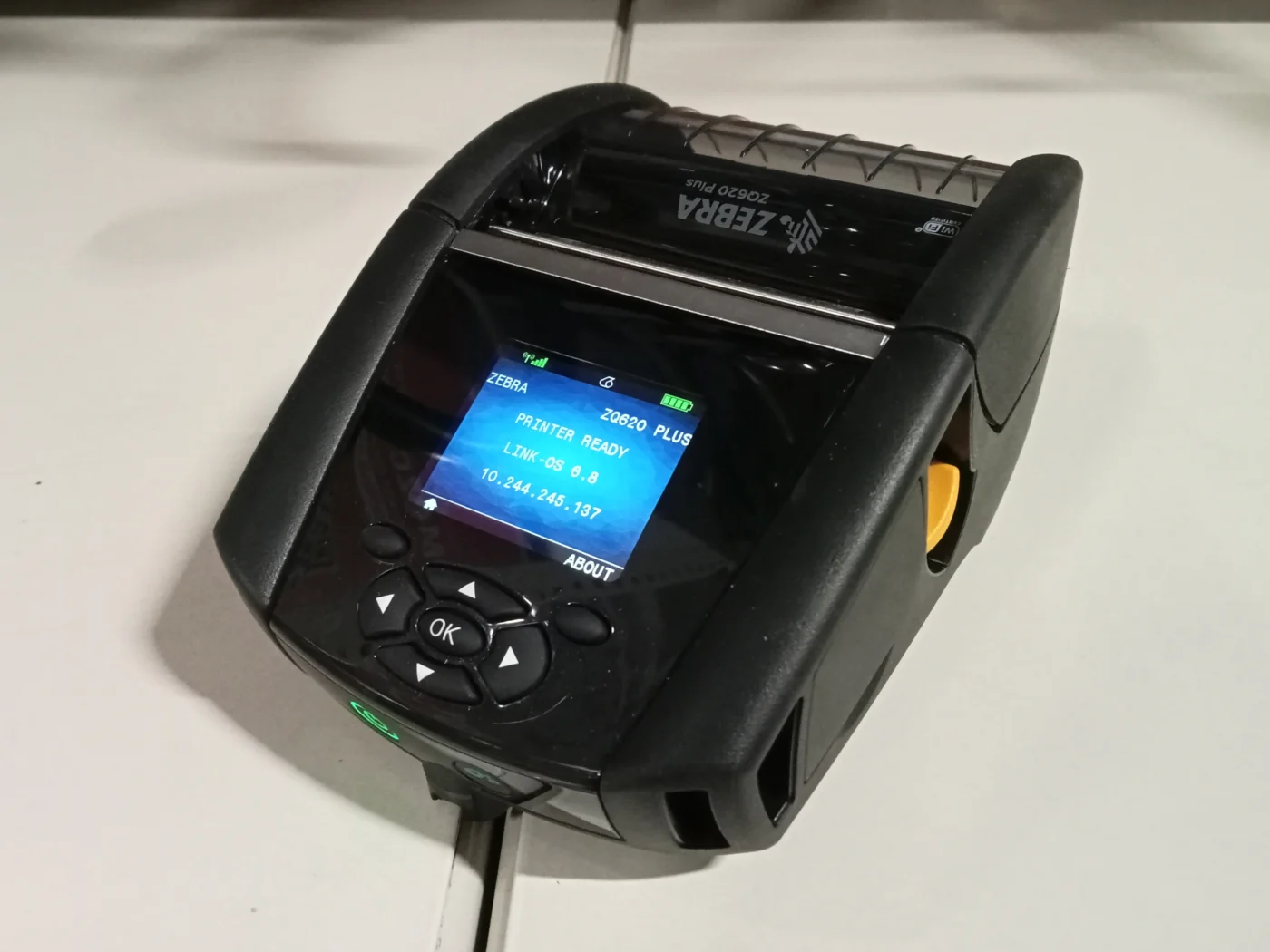
- Featured photograph: Mizael Contreras / Wikimedia Commons, CC BY-SA 4.0; resized and converted to WebP. Image illustrates a thermal printer, not a GCL stock claim.